

Documents of Value
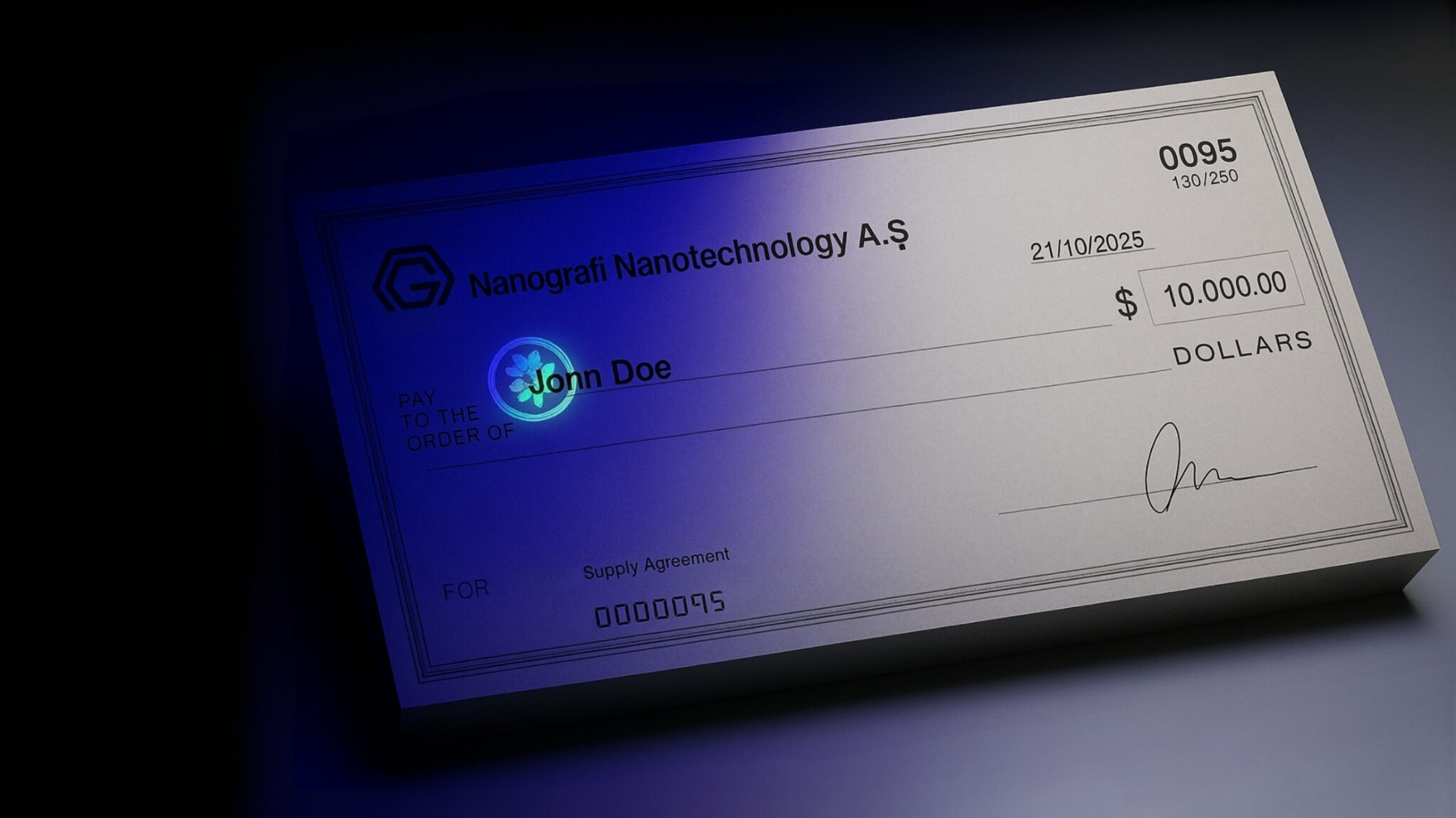
Nanografi Inks provide anti-counterfeiting capabilities via proprietary pigments and additives for share certificates, property deeds or bonds etc. Features like color-shifting, infrared tagging, and bi/tri-fluorescent effects deter duplication under normal scanning or photocopying conditions. With finely tuned properties, these inks are compatible with high-speed offset printing, ensuring both efficiency and security.
Document of Value Security Ink Solutions:
Contact Us
Request a sample, ask for detailed technical information, or explore a formulation matched to your own application.
- UV Offset Security Inks
- IR Security Inks
- Visible Inks
The Security Challenge
Documents of value — bonds, share certificates, diplomas, academic transcripts, notarial deeds, official permits — carry legal or financial weight far beyond the cost of the paper they are printed on. They are also printed in short runs, often by a general commercial printer rather than a dedicated security press, and they are verified irregularly: a bond may be checked twice in twenty years, a diploma once, by an HR department with no verification equipment at all.
That combination is exactly what makes them attractive to forge. The volume is too small to justify the security infrastructure a banknote receives, but the value of a single successful forgery can be very high. The practical answer is to put the security into the ink, where it costs little per document and needs nothing more than a UV lamp to check.

How Nanografi Security Inks Are Used
- UV offset security inks are the workhorse here. Printed into the design, they stay invisible in daylight and fluoresce under 365 nm long-wave or 254 nm short-wave light. Bi- and tri-fluorescent formulations respond differently at different wavelengths, so a single element can carry both a counter check and a second-level forensic check.
- IR security inks add a machine-readable layer through infrared absorption or reflection, for registries and institutions that verify at volume.
- Visible inks carry guilloche patterns, backgrounds and design elements, holding colour fidelity at high offset speeds and resisting fading in documents that are archived for decades.
Because certificates and legal documents are printed on paper, conventional oxidative-drying inks are the natural system: the film develops through oxidation and absorption into the substrate.
Why Security Inks Are Used Here
- Low cost per document — the security travels in the ink rather than in a separately applied feature.
- Verification with a UV lamp — no reader, no database, no training programme.
- Resistance to photocopying and scanning, which is the most common attack on a certificate.
- Fade resistance for documents kept in archives for decades.
- Forensic depth — bi- and tri-fluorescent responses provide a second level of verification when a document is disputed.
- Fogra certification and quality assurance across the Nanografi security ink portfolio.
Related Technologies and Industries
Documents of value span financial instruments and government and institutional documents. Closely related applications include banknote and security paper printing and passport and visa printing.
Technologies applied here: UV offset security inks, IR security inks, visible inks and conventional inks. See the full offset security ink portfolio or browse all security printing applications.
Run length, paper stock, press type and who will verify the document all shape the right specification. Tell us about the document below and our technical team will respond with the relevant ink options.
CONTACT
Discuss Your Application
Tell us about your substrate, printing system and verification requirements, and our technical team will come back with the relevant ink options.